
 WhatsApp
 sales@dagongess.com
 +86 18137952759
Why Is the Battery Module End Plate Critical in ESS Design?
A Battery Module End Plate is a rigid structural component installed at both ends of a lithium battery module. It functions as the primary load-bearing element responsible for distributing mechanical compression evenly across a stack of battery cells.
In lithium iron phosphate (LFP) energy storage modules, dozens or even hundreds of prismatic cells are arranged in series. Without a stable compression framework, the cell stack may experience uneven force distribution, leading to mechanical and electrochemical performance issues over time.
The end plate works together with structural frames, stainless steel belts, and fastening systems to form a complete battery compression structure.
Why Is Uniform Compression So Important?
Lithium cells undergo minor expansion and contraction during charge and discharge cycles. Over thousands of cycles, this movement becomes cumulative. If compression is uneven:
Some cells may experience higher stress than others
Internal resistance growth may become inconsistent
Localized heating may occur
Weld joints may fatigue prematurely
Long-term capacity degradation may accelerate
Uniform compression helps ensure:
Stable electrode contact
Reduced micro-vibration
Improved mechanical symmetry
Balanced thermal behavior
In large-scale ESS systems designed for 8000+ cycles and 15+ years of operation, maintaining compression consistency is a critical design requirement.
How Does End Plate Design Influence Structural Stability?
End plates must meet several engineering criteria:
High Structural Strength
They must withstand continuous compressive force without deformation.
Dimensional Precision
Even slight misalignment can create uneven stress across cells.
Fatigue Resistance
Repeated cycling over a decade requires materials that resist structural fatigue.
Compatibility with Thermal Systems
End plates must integrate seamlessly with air-cooling channels or liquid cooling plates.
Because energy storage systems often operate in industrial environments, end plates must also tolerate vibration, shock, and environmental stress.
What Materials Are Commonly Used?
Battery module end plates are typically manufactured from:
High-strength aluminum alloy
Coated steel
Structural composite materials (in specialized designs)
Aluminum alloys are widely adopted due to their balance between weight and mechanical strength. In high-capacity systems, weight optimization becomes increasingly important, especially in rack-mounted or containerized ESS installations.
How Do End Plates Function in Different ESS Scales?
1. Residential Energy Storage Systems
In small residential systems, such as stackable 5kWh–80kWh configurations, modules must remain compact while maintaining rigidity. End plates help preserve module alignment within limited enclosure space.
Wall-mounted and rack-based systems particularly rely on structural stability to ensure safety in residential environments.
2. Commercial & Industrial ESS
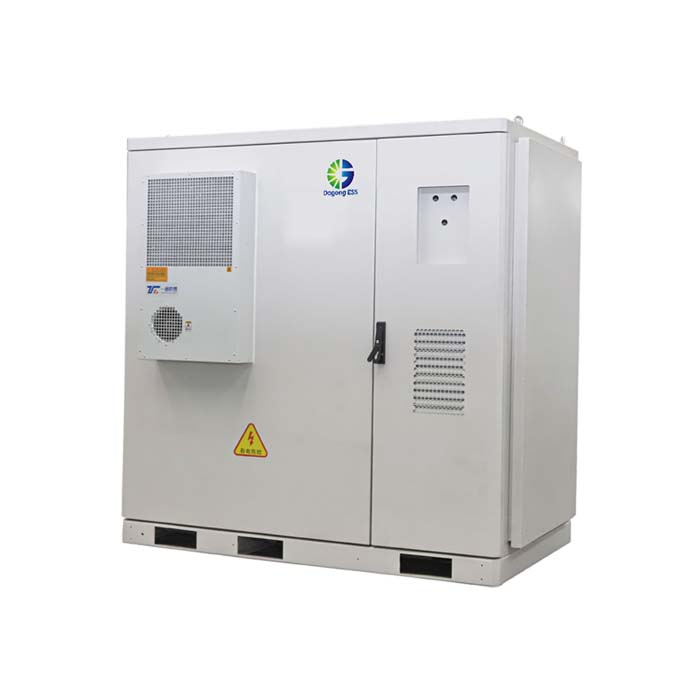
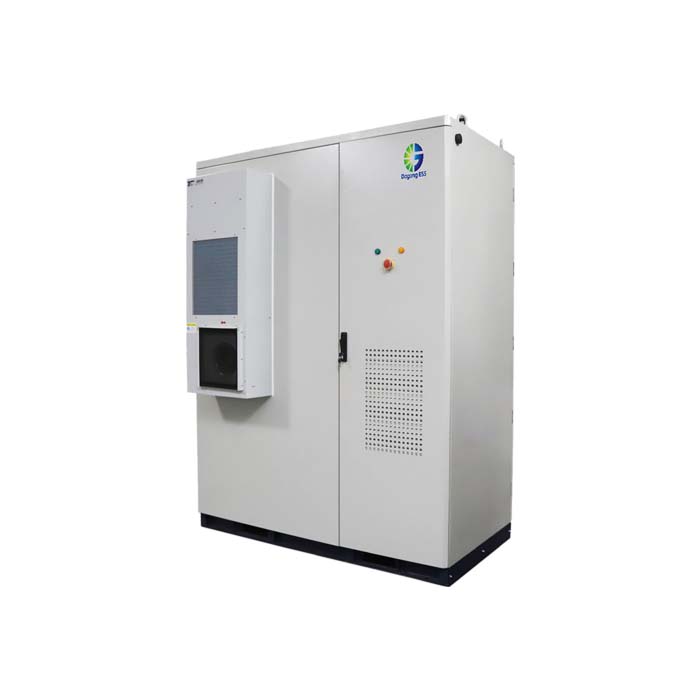
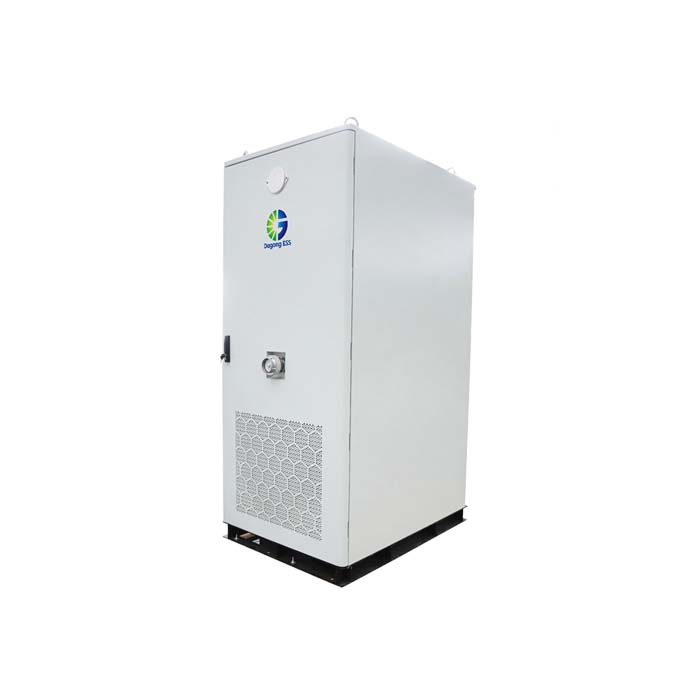
In cabinet-based systems like the
Dagong ESS 100kWh–144kWh Air-Cooled ESS and 241kWh–416kWh Air-Cooled ESS, modules are stacked vertically and horizontally within enclosed cabinets.
In these systems, end plates:
Maintain consistent compression across larger cell arrays
Improve vibration resistance in industrial settings
Support safe high-power operation
Enhance long-term structural durability
Industrial installations often experience mechanical stress from external conditions such as machinery vibration or transportation during deployment. End plates help ensure that module geometry remains stable.
3. Liquid-Cooled and Utility-Scale Systems
In advanced liquid-cooled systems such as:
241kWh Liquid-Cooled ESS
372kWh Liquid-Cooled ESS
end plate design becomes even more integrated.
Here, end plates must coordinate with:
Liquid cooling plates
Structural frames
Busbar systems
CCS (Cell Connection System)
Mechanical and thermal integration must be carefully balanced. Excessively rigid compression may restrict thermal expansion, while insufficient compression can compromise electrical stability.
This structural-thermal coordination is particularly important in high-density battery packs.
How Does End Plate Design Affect Thermal Management?
Mechanical design and thermal performance are closely connected.
When compression is uniform:
Contact resistance between cells remains consistent
Heat generation is evenly distributed
Thermal pathways remain stable
If compression varies:
Certain cells may overheat
Cooling systems may struggle to equalize temperature
Long-term degradation may accelerate
In air-cooled systems, end plate spacing must not obstruct airflow channels.
In liquid-cooled systems, end plates must align precisely with cooling plate interfaces to maintain even thermal contact.
Therefore, battery module end plates are not purely structural components; they directly influence thermal consistency and electrochemical stability.
What Happens If End Plates Are Poorly Designed?
Inadequate end plate design may lead to:
Structural warping
Uneven pressure distribution
Increased impedance variation
Module swelling over time
Reduced cycle life
For high-investment industrial and utility ESS projects, these risks are unacceptable. Structural reliability must match the system's long-term operational expectations.
How Long Do Battery Module End Plates Last?
When properly engineered and integrated, end plates are designed to match the full lifecycle of the energy storage system.
For systems targeting:
8000+ charge-discharge cycles
15+ years operational lifespan
end plates must maintain dimensional stability and mechanical integrity without fatigue or corrosion failure.
Routine inspection during scheduled maintenance ensures continued structural reliability.
Why Is Mechanical Design Often Underestimated in ESS Engineering?
Energy storage discussions typically emphasize:
Battery chemistry
Power conversion efficiency
BMS intelligence
Cooling technology
However, without reliable mechanical infrastructure:
Electrical connections may degrade
Thermal performance may become inconsistent
Safety margins may narrow over time
Battery module end plates serve as the foundational framework that allows electrical and thermal systems to operate as intended.
As ESS projects scale toward higher capacity and longer design life, mechanical engineering becomes increasingly critical.
A Battery Module End Plate is more than a structural accessory. It is a key component in maintaining uniform compression, structural integrity, and long-term reliability in modern energy storage systems.
From residential battery stacks to multi-megawatt containerized installations, proper end plate design supports:
Mechanical stability
Thermal consistency
Electrical reliability
Extended cycle life
In high-cycle ESS environments, structural design is not secondary—it is fundamental to system performance and safety.
If you are interested in battery module end plate products or would like to learn more about related energy storage solutions, please contact Dagong ESS at sales@dagongess.com.