
 WhatsApp
 sales@dagongess.com
 +86 18137952759
How to Select Battery Capacity for C&I Energy Storage Projects: A Practical Engineering Approach
Why Capacity Selection Is Often Misunderstood
In many commercial and industrial energy storage projects, capacity selection is treated as a straightforward calculation—take the load, estimate the usage, and choose a system size that seems “safe.” In reality, this approach often leads to either overdesign or underperformance.
The challenge lies in the fact that energy storage is not a static asset. It interacts dynamically with load behavior, electricity pricing, operating schedules, and even weather conditions. A system that looks sufficient on paper may fail to deliver expected savings once deployed. On the other hand, oversizing a system can tie up capital without generating proportional returns.
This is why capacity selection needs to be approached as a combination of engineering analysis and economic optimization, rather than a simple sizing exercise.
Start with the Load, but Don’t Stop There
Any sizing process begins with understanding the load profile, but the level of detail matters.
Looking only at average consumption is not enough. What really defines system requirements are the peaks, the duration of those peaks, and how frequently they occur. For example, a factory might have a stable baseline load throughout the day but experience sharp spikes when certain equipment starts up. These spikes may only last 30 minutes, but they can significantly impact demand charges.
Capturing this behavior requires interval data—ideally 15-minute or even 5-minute resolution. Once the load curve is mapped out, patterns begin to emerge. Some facilities have predictable daily cycles, while others vary significantly depending on production schedules or external factors.
This data forms the foundation of capacity selection, but it should be interpreted in the context of how the system will actually be used.
Different Applications Lead to Different Answers
One of the most common mistakes is assuming that all C&I storage systems are designed for the same purpose. In practice, the application defines the sizing logic.
For peak shaving, the goal is to reduce the highest demand levels. Here, the key question is not total energy consumption, but how much energy is needed to shave the peak and for how long. In many cases, a relatively small energy capacity can deliver significant savings if it is targeted at the right time window.
For load shifting, the focus shifts toward storing energy during low-cost periods and using it during peak pricing hours. This typically requires larger energy capacity, but not necessarily high power output.
Backup power introduces another dimension. Instead of optimizing for cost, the system must ensure reliability. Capacity is determined by critical load requirements and the desired backup duration—whether that is one hour or several hours.
In projects that combine multiple use cases, the sizing process becomes more complex, often requiring trade-offs between competing objectives.
The Balance Between Power and Energy
A well-sized system is not defined by capacity alone. Power (kW) and energy (kWh) must be considered together.
In practical terms, power determines how quickly the system can respond, while energy determines how long it can sustain that response. A system with high power but limited energy may handle short peaks effectively but struggle with longer demand periods. Conversely, a system with large energy capacity but limited power may not be able to respond quickly enough to sudden load changes.
Finding the right balance depends on the load profile and application. This is where many projects benefit from simulation tools, which allow different configurations to be tested against real load data.
Environmental and System-Level Considerations
Capacity is not only a function of demand—it is also influenced by how the system performs under real-world conditions.
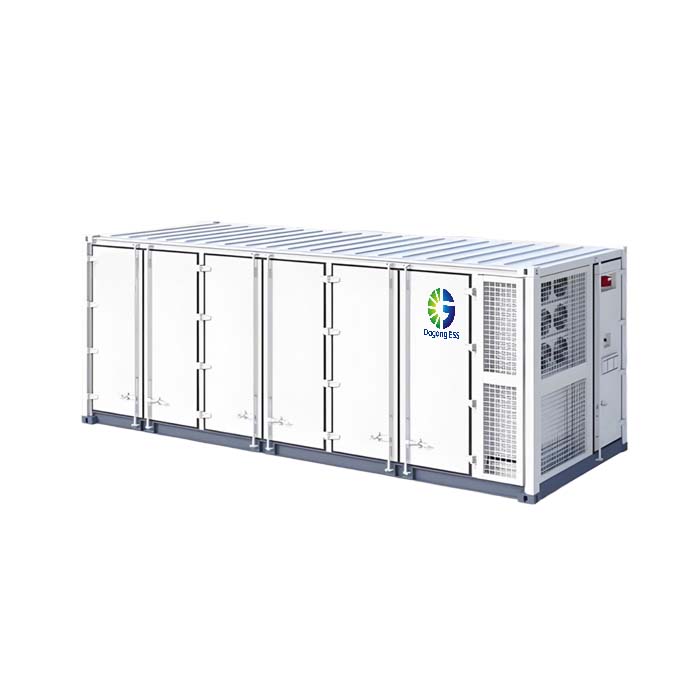
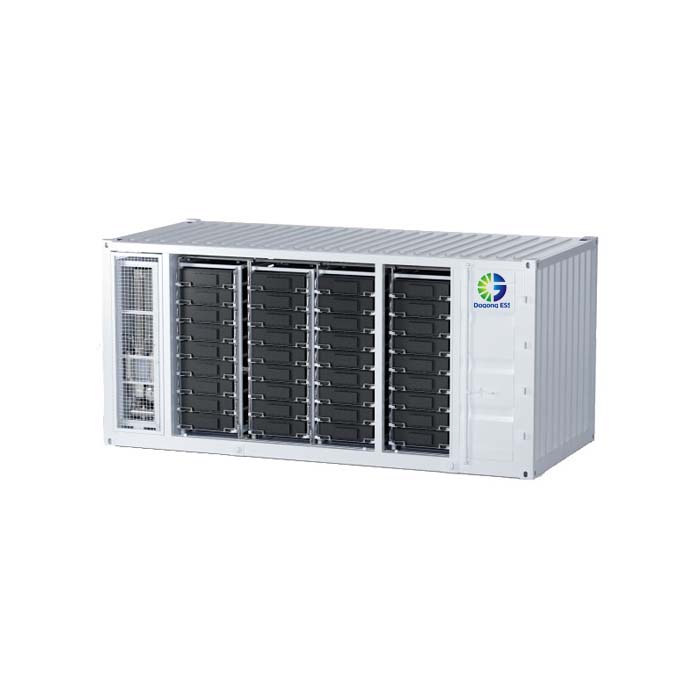
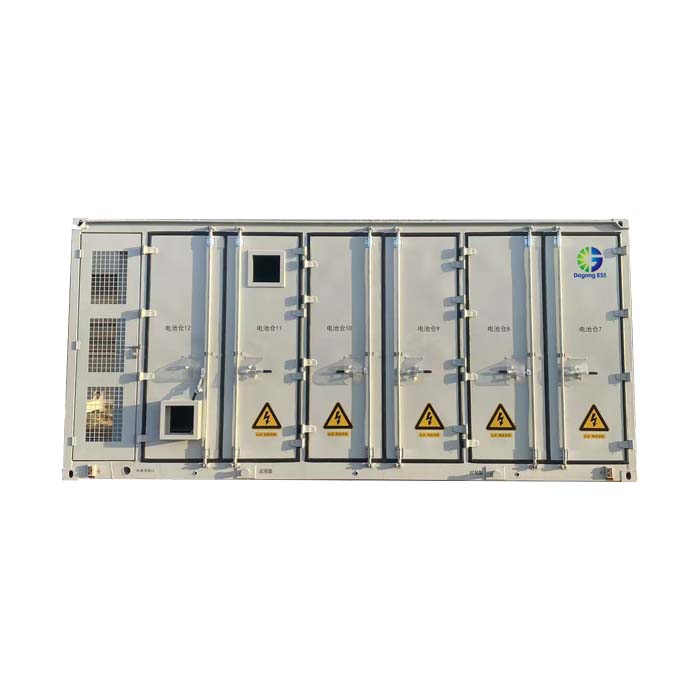
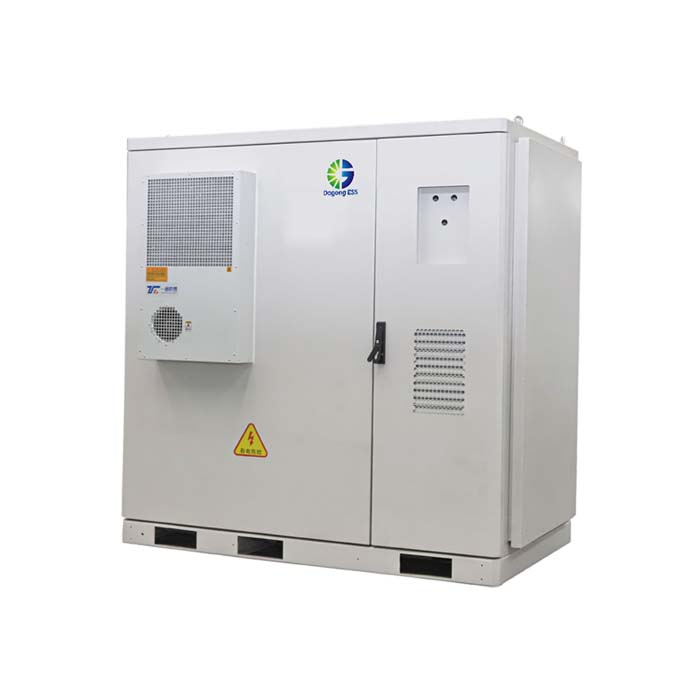
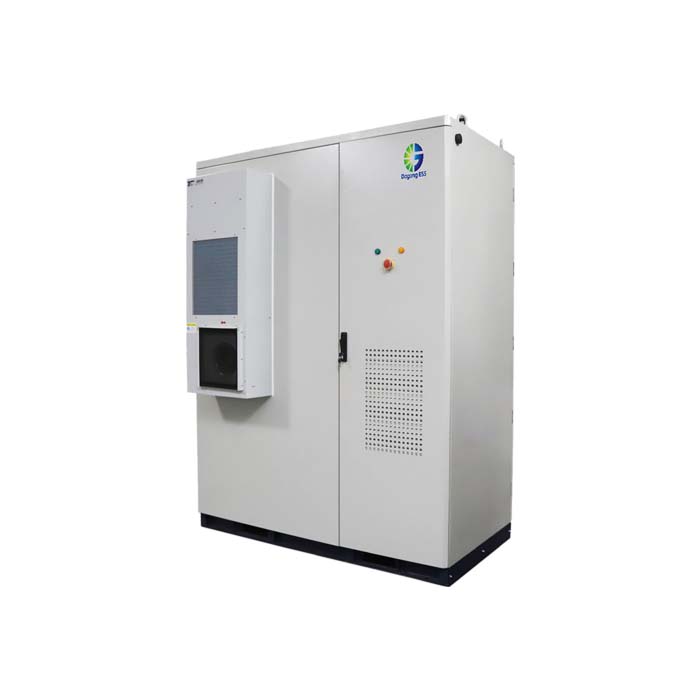
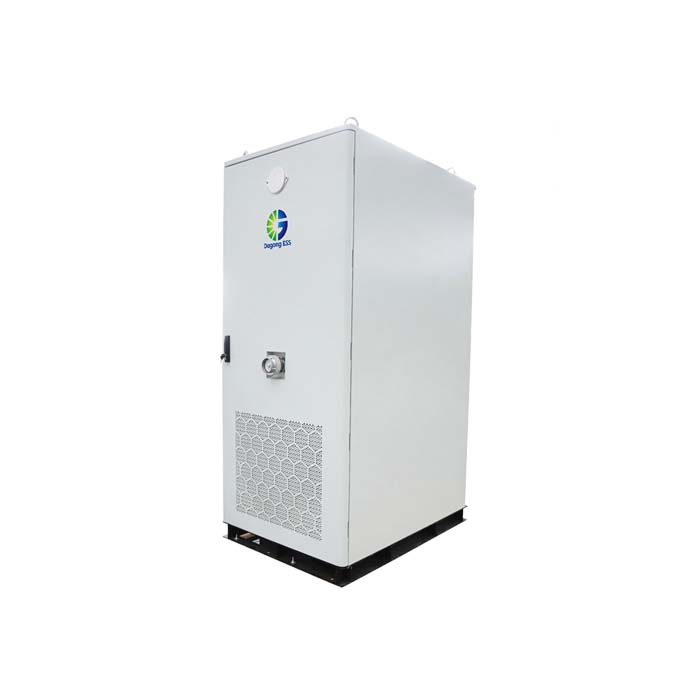
Temperature, for example, has a direct impact on battery efficiency and usable capacity. In high-temperature environments, thermal management becomes critical. Air-cooled systems such as 100kWh–416kWh BESS configurations can perform well in moderate climates, but in hotter regions or high-duty-cycle applications, liquid-cooled systems such as 215kWh or 372kWh solutions provide more stable performance.
System configuration also affects how capacity is deployed. Modular designs allow capacity to be scaled in increments, making it easier to match system size with actual needs. This is particularly useful in projects where future expansion is expected.
Economics: Where Engineering Meets Reality
Ultimately, capacity selection must make sense economically.
Electricity tariffs play a major role here. In regions with high demand charges, even a small reduction in peak demand can justify the investment. In time-of-use pricing environments, the spread between off-peak and peak prices determines how much value load shifting can generate.
The goal is not to maximize stored energy, but to maximize financial return. This often leads to solutions that are smaller than initially expected but more precisely targeted.
A useful approach is to model different capacity scenarios and evaluate their payback periods. In many cases, the optimal solution is not the largest system, but the one that delivers the highest return per unit of investment.
Planning for Change
Energy usage rarely remains constant over the lifetime of a project. Production levels change, equipment is upgraded, and energy policies evolve.
For this reason, flexibility should be part of the initial design. Modular energy storage systems allow additional capacity to be added later, reducing the need for large upfront investment.
This approach also reduces risk. Instead of committing to a full-scale system from the beginning, projects can start with a smaller installation and expand based on actual performance and demand.
Bringing It All Together
In practice, selecting battery capacity is an iterative process. It starts with data, moves through analysis and modeling, and is refined through practical considerations such as installation constraints and budget limits.
There is no universal formula that applies to every project. What works for a manufacturing facility may not be suitable for a commercial building or a logistics center. The key is to align technical design with operational reality.
Battery capacity selection for commercial and industrial energy storage projects is less about finding a single “correct” number and more about finding the right balance.
It requires understanding how energy is used, how the system will operate, and what outcomes the project is trying to achieve. When done properly, it leads to systems that are not only technically sound but also economically effective.
Dagong ESS provides modular energy storage solutions ranging from 100kWh air-cooled systems to large-capacity liquid-cooled configurations, supporting flexible capacity design and scalable deployment across a wide range of C&I applications.