
 WhatsApp
 sales@dagongess.com
 +86 18137952759
Energy Storage Solutions for AI Data Centers (AIDC)
An Artificial Intelligence Data Center (AIDC) is a specialized computing facility designed to support large-scale AI model training and inference. Compared with traditional data centers, AIDCs operate with significantly higher power density, more volatile load profiles, and stricter requirements for power quality and reliability. High-performance GPUs, accelerators, and AI clusters place continuous stress on electrical infrastructure, making energy supply one of the most critical design challenges.
As AI workloads expand, AIDCs are evolving toward high-voltage DC (HVDC) power architecture, liquid-cooled servers, and modular deployment models. In this context, energy storage systems are no longer optional backup components but foundational elements of the overall power ecosystem.
What Challenges Do AI Data Centers Face in Power Supply?
AI data centers encounter multiple power-related challenges throughout their lifecycle. Rapid load fluctuations caused by AI training cycles can lead to voltage instability and increased stress on grid connections. At the same time, higher rack power density raises thermal management complexity and limits the effectiveness of traditional air-cooled power systems.
In addition, many AIDC projects must meet increasingly strict requirements for energy efficiency, carbon reduction, and grid compliance. These constraints demand solutions that can balance performance, reliability, and sustainability while remaining economically viable at scale.
Why Is Energy Storage Critical for AIDC Infrastructure?
Energy storage plays a central role in stabilizing power supply for AI data centers. By absorbing short-term load spikes and delivering fast-response power, storage systems help maintain voltage and frequency stability. They also support peak shaving, capacity optimization, and uninterrupted operation during grid disturbances.
AModern energy storage for AI data centers extends beyond emergency backup. It enables flexible power management, enhances renewable energy utilization, and reduces the operational risks associated with highly dynamic AI workloads. As a result, storage systems are increasingly integrated into the core design of AIDC power architecture.
How Do Commercial and Industrial ESS Support AI Data Centers?
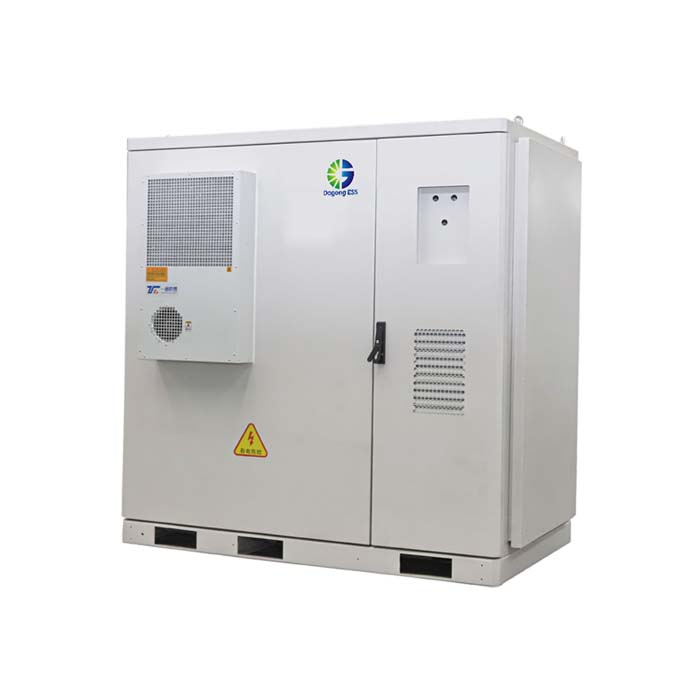
Commercial and industrial energy storage systems are widely deployed within or near AI data center facilities to provide localized power support. These systems are typically modular, scalable, and designed for fast response.
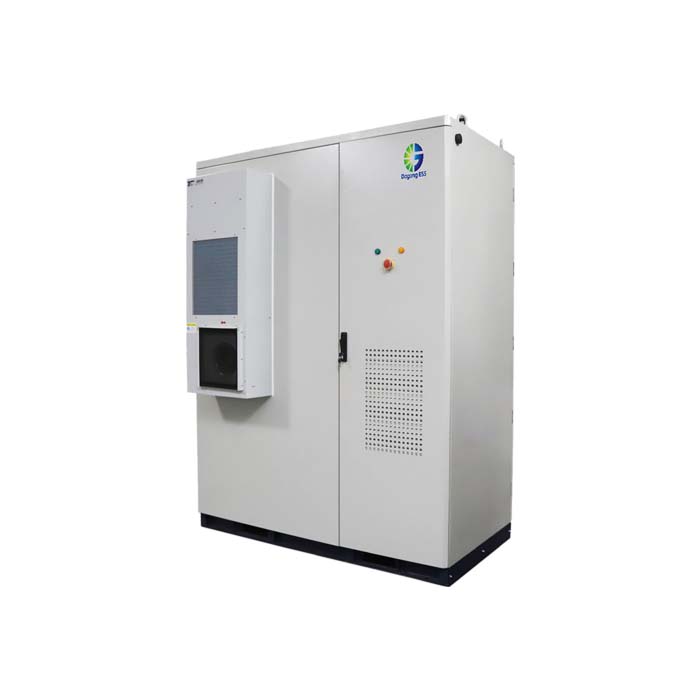
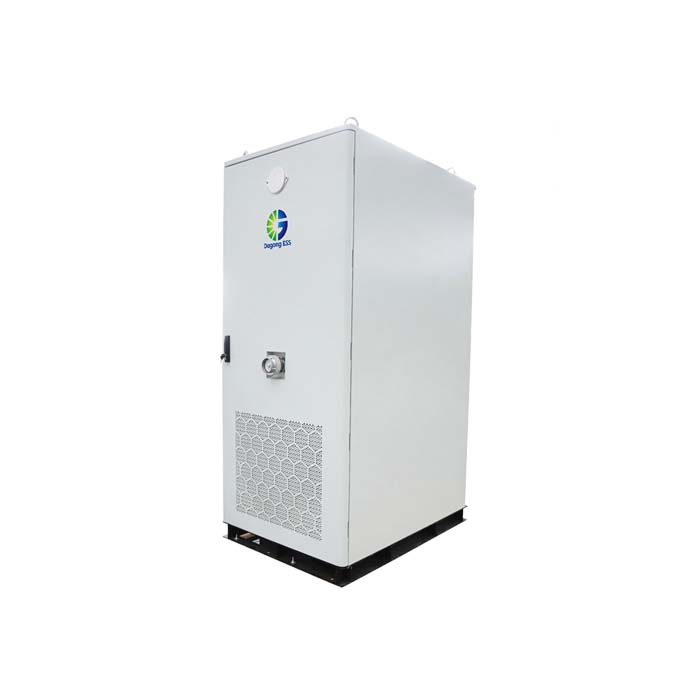
Air-cooled ESS in the 144–416kWh range offer flexible installation and cost-effective performance for auxiliary power stabilization and peak load management. For environments with higher continuous loads and stricter thermal requirements, liquid-cooled ESS in the 241–372kWh range deliver improved heat dissipation, higher efficiency, and longer service life.
Such commercial and industrial ESS solutions are particularly effective when paired with HVDC distribution and liquid-cooled IT infrastructure, enabling stable operation under high power density conditions.
What Role Do Utility-Scale Energy Storage Systems Play?
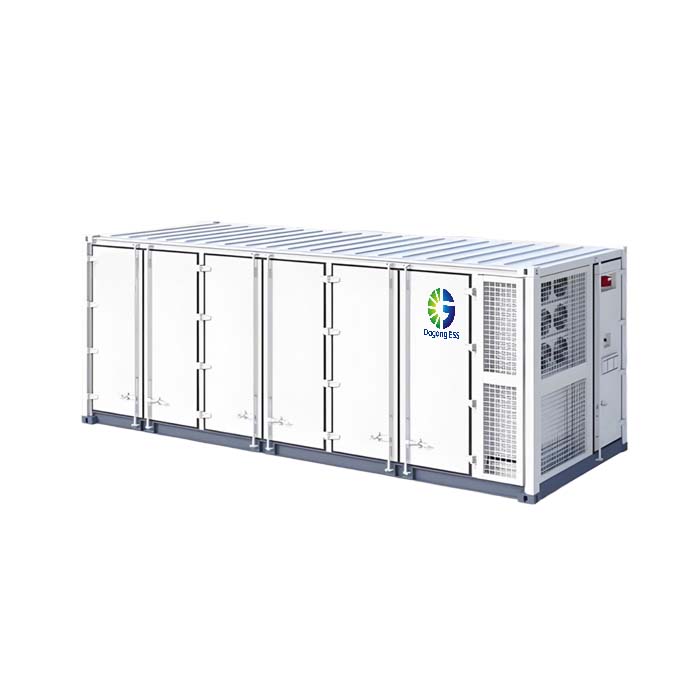
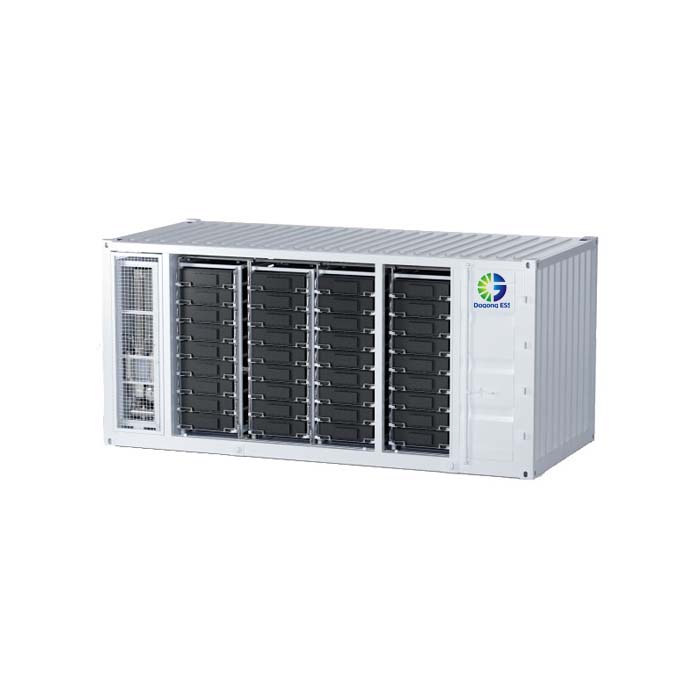
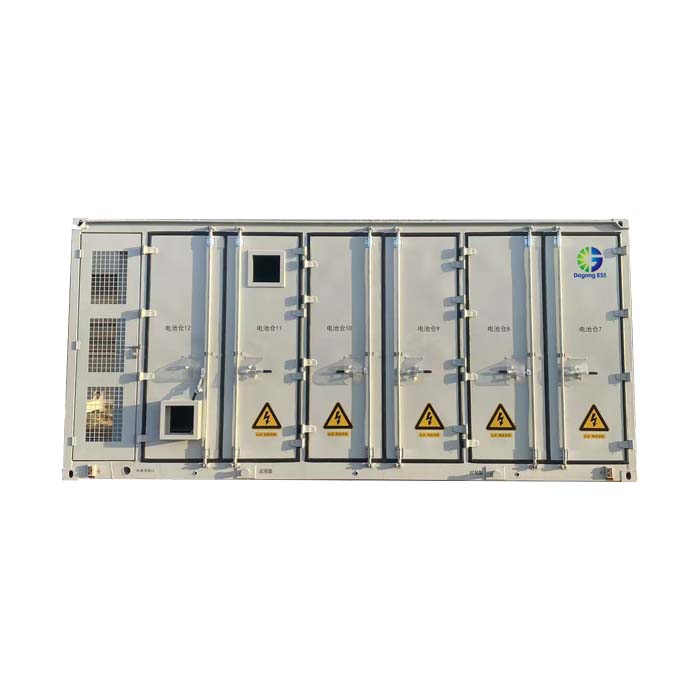
As AI data centers scale toward hundreds of megawatts or gigawatt-level capacity, utility-scale energy storage becomes essential. Large containerized battery systems help decouple AI load volatility from upstream generation and transmission networks.
Utility-scale systems, including 5MWh containerized energy storage solutions, support grid buffering, renewable energy firming, and long-duration power balancing. By enhancing grid resilience and reducing peak demand stress, these systems enable faster deployment and more reliable operation of large AIDC projects.
How Does Liquid Cooling Improve Energy Storage Performance?
Liquid cooling has emerged as a key technology for both AI servers and energy storage systems. Compared with traditional air cooling, liquid-cooled energy storage systems offer superior thermal efficiency, more uniform temperature control, and reduced footprint.
In high-density AIDC environments, liquid-cooled ESS maintain stable performance under continuous high-load operation, extend battery lifespan, and improve overall system safety. These advantages make liquid-cooled storage an increasingly preferred option for next-generation AI data centers.
How Can Energy Storage Support Renewable Integration and Sustainability?
Many AI data center developers aim to increase the share of renewable energy in their power mix. Energy storage systems enable this transition by smoothing the intermittency of solar and wind generation and ensuring consistent power quality.
By integrating storage with renewable sources and grid connections, AIDC operators can reduce carbon intensity, optimize energy costs, and improve energy autonomy. Source–grid–load–storage architectures are becoming a practical pathway toward sustainable AI infrastructure.
How Does Dagong ESS Support AI Data Center Applications?
Dagong ESS provides a comprehensive portfolio of energy storage solutions suitable for AI data center applications. For on-site and near-site deployment, Dagong ESS offers modular commercial and industrial systems, including 144–416kWh air-cooled ESS and 241–372kWh liquid-cooled ESS, designed to support high-density loads and fast power response.
For large-scale AIDC projects, Dagong ESS delivers 5MWh liquid-cooled containerized energy storage systems that enhance grid stability, support renewable integration, and enable reliable long-duration operation. These solutions are engineered to integrate seamlessly with modern data center power architecture and global grid requirements.
What Should Be Considered When Selecting Energy Storage for AIDC Projects?
Selecting the right energy storage solution for an AI data center requires careful evaluation of multiple factors, including power capacity, response speed, cooling method, grid compatibility, and lifecycle cost. Project scale, deployment timeline, and sustainability targets also play a critical role.
A modular and scalable approach allows operators to adapt storage capacity as AI workloads grow, while proven thermal management and control systems ensure long-term reliability. Working with experienced energy storage suppliers can help reduce integration risks and accelerate project delivery.
Frequently Asked Questions (FAQ)
Q: How much energy storage capacity does an AI data center need?
A: Capacity requirements vary depending on load profile, grid conditions, and operational objectives. Many AIDC projects combine on-site commercial and industrial ESS with utility-scale systems for comprehensive coverage.
Q: Is liquid-cooled ESS necessary for all AI data centers?
A: Not all projects require liquid cooling, but it is increasingly preferred for high-density, continuous-load environments where thermal stability and efficiency are critical.
Q: Can energy storage replace traditional UPS systems?
A: In some architectures, advanced energy storage systems can complement or partially replace traditional UPS, offering higher efficiency and better scalability.
If you are interested in energy storage solutions for AI data centers, please contact Dagong ESS.
Email: sales@dagongess.com
Website: www.dagongess.com