
 WhatsApp
 sales@dagongess.com
 +86 18137952759
Is Watts the New Currency? Power Infrastructure and Energy Storage Behind AI Growth
In a recent long-form podcast interview, Tesla CEO Elon Musk proposed a striking redefinition of future hard assets, stating that "watts as the new currency" will ultimately determine national and industrial competitiveness. In this context, watts represent not only electricity itself, but also the ability to generate, transmit, convert, and utilize power efficiently.
This concept reflects a broader shift in technological development. Artificial intelligence is no longer limited primarily by software innovation or semiconductor performance. Instead, the true constraint lies in access to reliable electricity and the infrastructure required to deliver it to energy-intensive computing facilities.
What Is AI Power Infrastructure And Why Is It A Bottleneck?
When asked what limits exponential growth across AI, energy, and space systems, Musk responded without hesitation: power generation. However, AI power infrastructure extends far beyond power plants alone. It includes high-voltage transmission lines, substations, transformers, power electronics, cooling systems, and energy storage.
Electricity generated at hundreds of kilovolts must be stepped down multiple times before reaching data center racks operating at only a few hundred volts. Any inefficiency or delay in this process can restrict computing capacity. As AI clusters scale to hundreds of megawatts or even gigawatts, these bottlenecks become increasingly difficult to overcome.
How Do Energy Storage Systems Support AI Power Infrastructure?
Battery energy storage systems play a crucial role in stabilizing AI power infrastructure. They absorb fluctuations, smooth peak demand, and provide instant backup when grid supply is unstable. Without energy storage, even advanced grids struggle to support the highly dynamic loads created by AI training and inference.
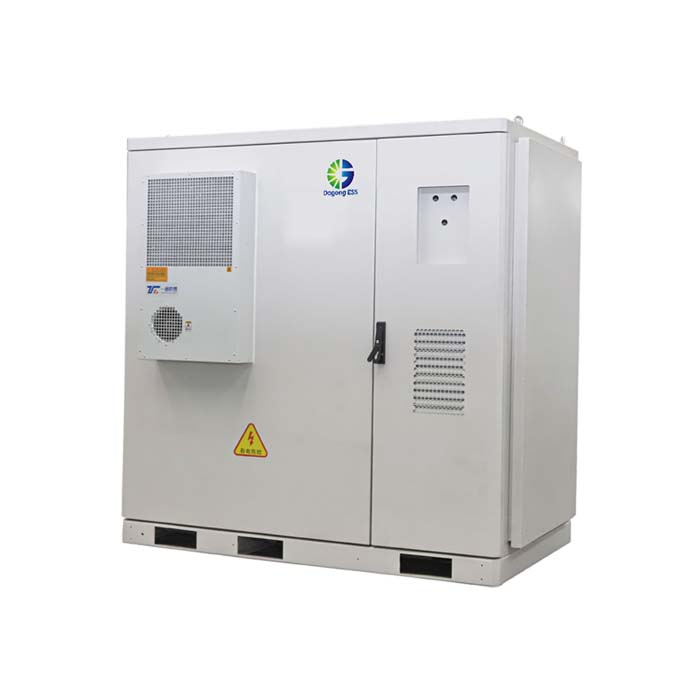
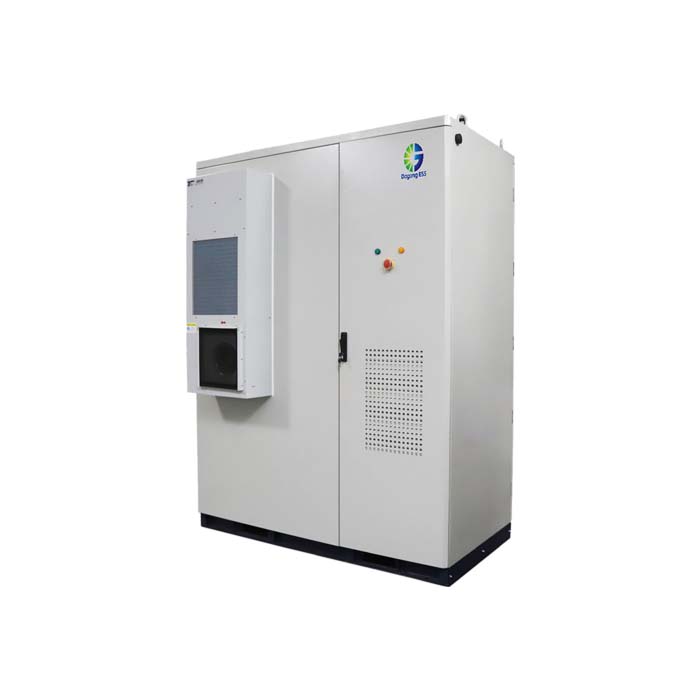
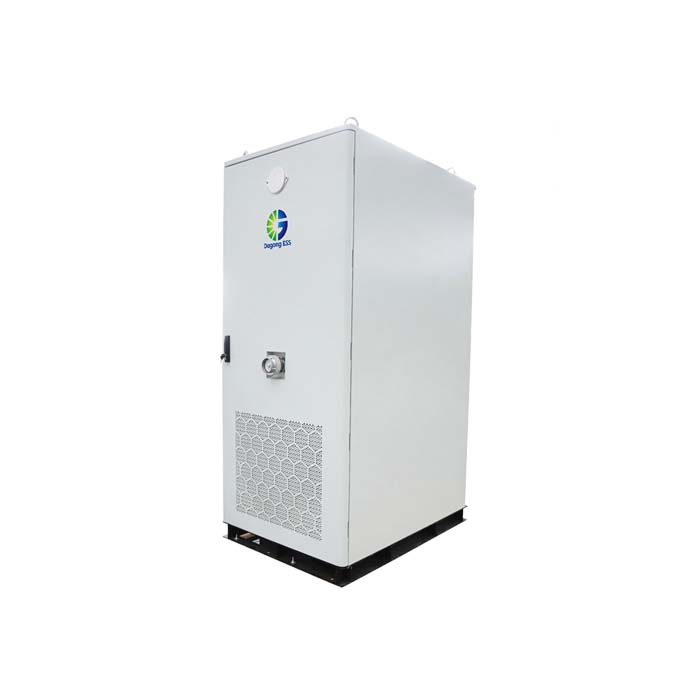
In commercial and industrial environments, integrated solutions such as Dagong ESS 144–416kWh air-cooled ESS and 241–372kWh liquid-cooled ESS are deployed close to the load. These systems improve voltage stability, reduce peak demand charges, and protect sensitive computing equipment from power disturbances.
Why Are Data Centers Shifting From Air Cooling To Liquid Cooling?
Traditional air cooling was sufficient for earlier generations of data centers, but modern AI servers generate far higher heat densities. As rack power continues to rise, air cooling approaches its physical limits.
Liquid-cooled energy storage systems and liquid-cooled data center designs enable much more precise thermal management. By maintaining a narrow operating temperature range, liquid cooling reduces thermal stress on battery cells and electronic components. Systems such as Dagong ESS 215–372kWh liquid-cooled ESS demonstrate how advanced cooling can significantly extend battery life while improving overall safety and efficiency.
How Does Power Volatility Impact AI Data Center Operations?
AI training workloads are inherently unstable. Rapid changes in computing intensity lead to sharp swings in power demand, creating challenges for grid operators and data center owners alike.
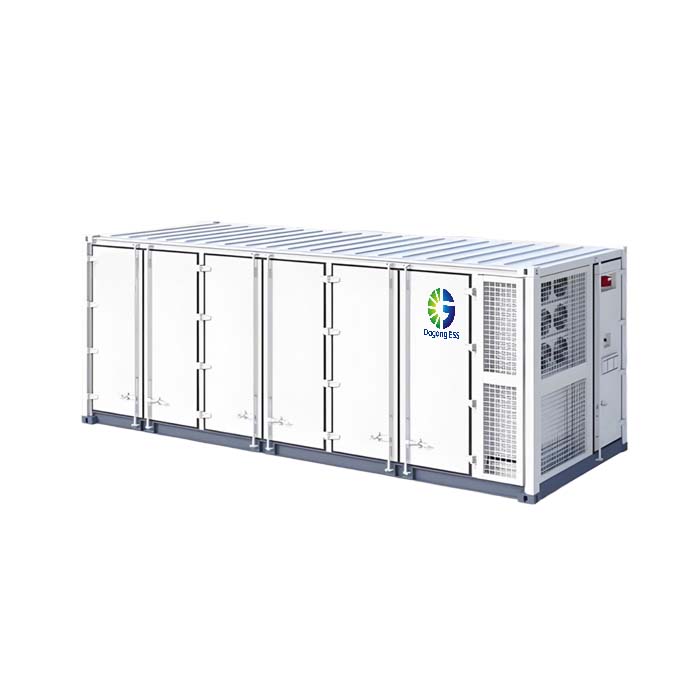
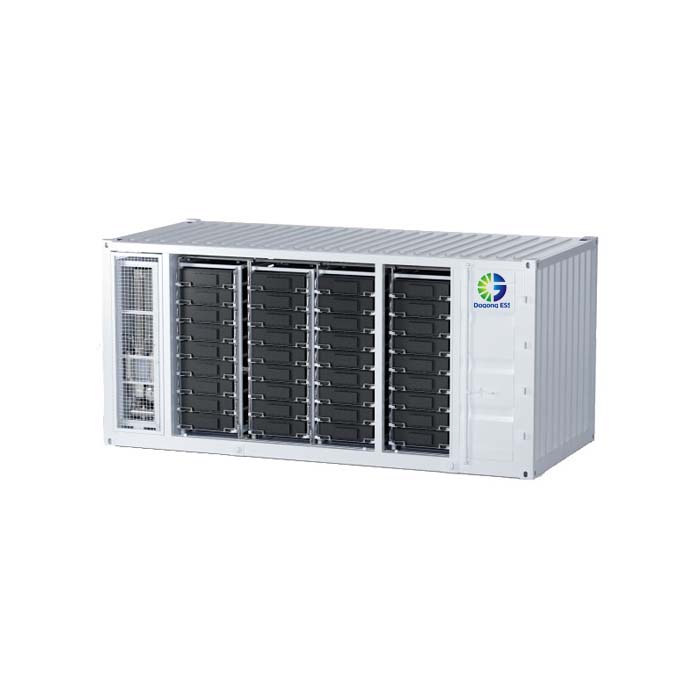
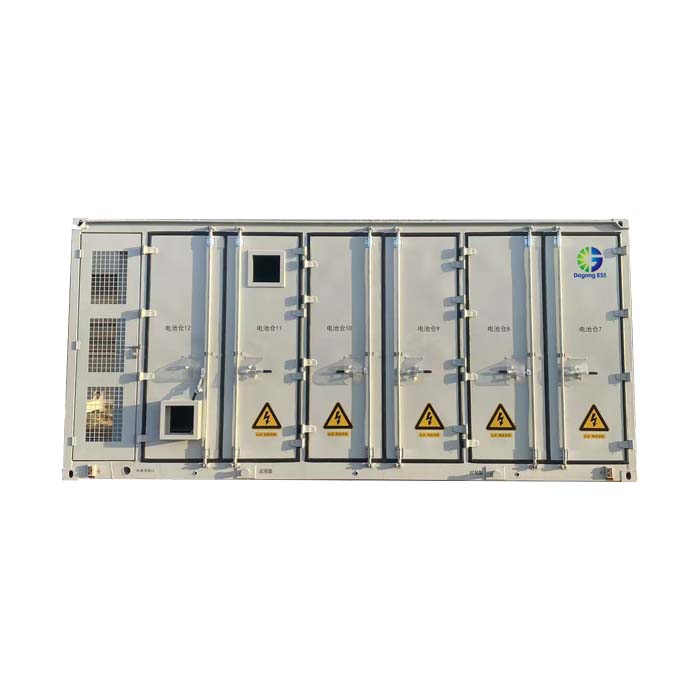
Musk cited xAI’s Colossus 2 project in Memphis as an example, where insufficient grid connection capacity forced the use of temporary generation and large battery systems. This highlights why energy storage for AI data centers is no longer optional. Solutions such as Dagong ESS 5MWh containerized energy storage systems provide large-scale buffering, allowing data centers to operate continuously even when grid conditions are constrained.
Why Does China Have A Structural Advantage In Electricity Supply?
Musk repeatedly emphasized China’s advantage in electricity generation capacity, renewable energy deployment, and battery manufacturing. Massive investments in solar, wind, and grid infrastructure have created an energy ecosystem capable of supporting power-hungry industries.
Equally important is China’s ability to integrate energy storage systems at scale. By converting intermittent renewable generation into stable, dispatchable power, storage enables consistent operation of AI data centers and industrial facilities. This integration of generation and storage forms a foundation for long-term competitiveness in AI computing.
How Do Commercial And Industrial ESS Support AI And High-Performance Computing?
Commercial and industrial ESS bridge the gap between centralized power grids and localized AI demand. In industrial parks, commercial campuses, and edge data centers, systems such as Dagong ESS 144–416kWh air-cooled ESS offer cost-effective solutions for moderate cycling and load management.
For more demanding scenarios, Dagong ESS 241–372kWh liquid-cooled ESS provide enhanced thermal stability and are better suited for high-frequency charge-discharge cycles. These systems not only support AI workloads but also enable peak shaving, backup power, and microgrid operation.
How Does Utility-Scale Energy Storage Enable AI Expansion?
As AI infrastructure scales, localized ESS alone is insufficient. Utility-scale battery energy storage plays a critical role in supporting national and regional grids.
Large installations such as Dagong ESS 5MWh containerized energy storage systems are deployed alongside renewable power plants and substations. These systems provide frequency regulation, capacity support, and emergency backup, ensuring that AI data centers can scale without overwhelming grid infrastructure.
Why Is Energy Storage Becoming Foundational To The AI Economy?
Musk’s long-term vision includes space-based solar power and orbital energy networks. While these concepts remain futuristic, they underscore a present-day reality: energy storage is foundational to the AI economy.
As semiconductor performance gains slow and Moore’s Law continues to weaken, the marginal benefit of smaller chips diminishes. In contrast, improvements in power availability, cooling efficiency, and storage technology deliver immediate and scalable benefits. Companies and countries that invest in energy storage will gain lasting advantages in AI deployment.
How Do Watts Define The Future Of AI Leadership?
The idea of watts as the new currency captures a fundamental shift in how technological leadership is measured. AI development is now as much an energy challenge as it is a computing challenge.
From liquid-cooled energy storage systems in commercial and industrial projects to utility-scale battery energy storage supporting national grids, power infrastructure has become central to global competition. With solutions such as Dagong ESS 144–416kWh air-cooled ESS, 241–372kWh liquid-cooled ESS, and 5MWh containerized energy storage systems, the path toward scalable and reliable AI infrastructure becomes clearer.
If you are interested in commercial and industrial or utility-scale energy storage solutions, please contact Dagong ESS.
Email: sales@dagongess.com
Website: www.dagongess.com