
 WhatsApp
 sales@dagongess.com
 +86 18137952759
DC vs AC Containerized Energy Storage: Choosing the Right Architecture for Your Project
Containerized energy storage systems
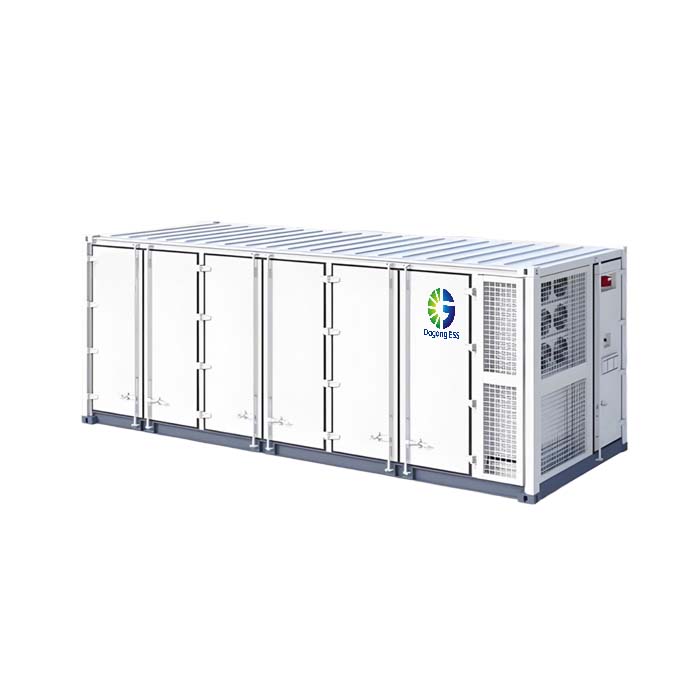
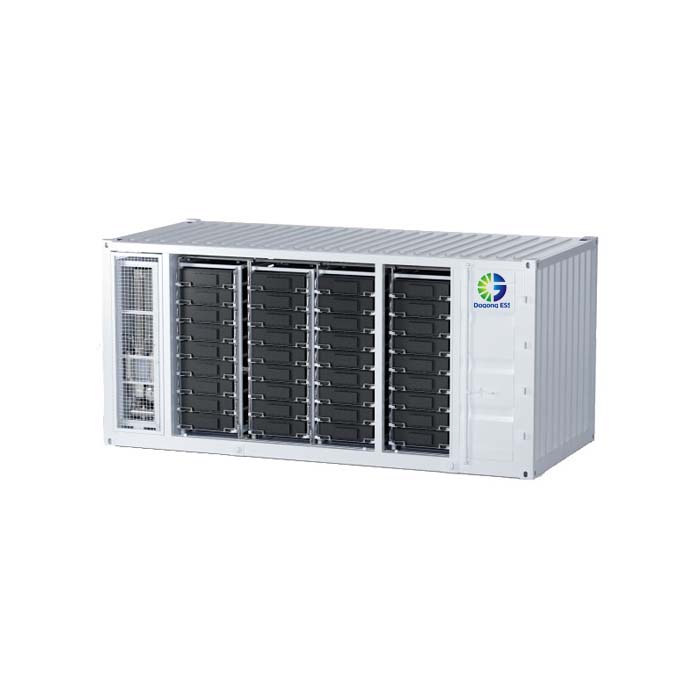
Containerized energy storage systems have become central to modern renewable energy projects, microgrids, and industrial applications, offering modularity, rapid deployment, and reliable performance. Two primary architectures dominate the market: DC-side (DC-coupled) storage, where battery modules connect directly to a high-voltage DC bus before any AC conversion, and AC-side (AC-coupled) storage, where battery modules deliver AC power through integrated power conversion systems (PCS). Each approach offers distinct benefits and trade-offs, making the choice dependent on project objectives, existing infrastructure, and operational requirements.
DC-side container energy storage typically operates at high-voltage DC (1000–1500V), reducing transmission losses and increasing round-trip efficiency. By minimizing conversion stages, these systems achieve higher overall efficiency, tighter thermal control, and lower footprint within the container. Advanced thermal management, especially liquid cooling, ensures uniform cell temperatures and extends battery lifespan, with optimized BMS algorithms allowing 6000–8000+ cycles at 80% depth-of-discharge, corresponding to 15+ years of operation. Systems like Dagong ESS 5MWh DC container illustrate this architecture’s suitability for large-scale solar and wind integration, grid services, and high-frequency cycling applications.
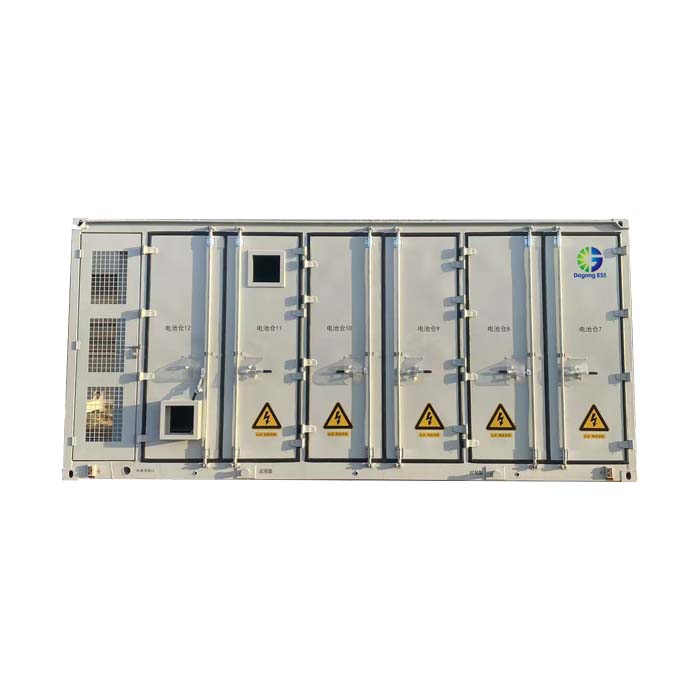
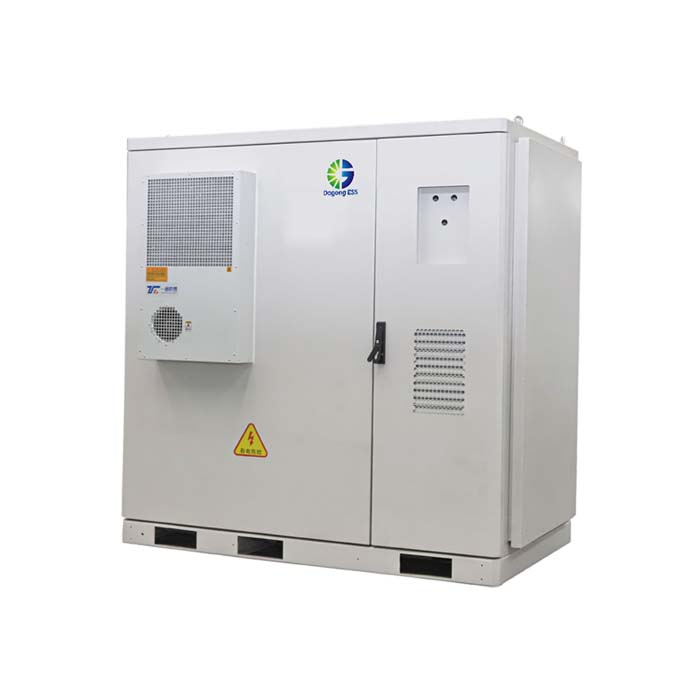
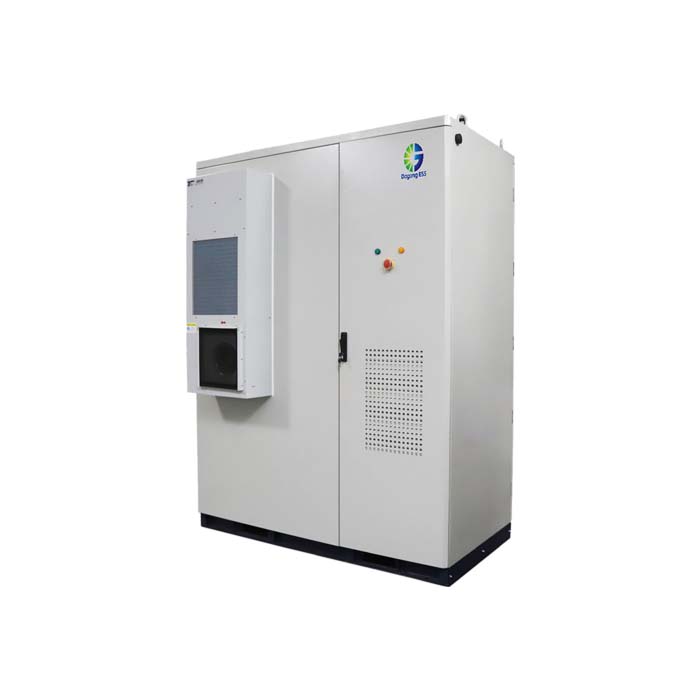
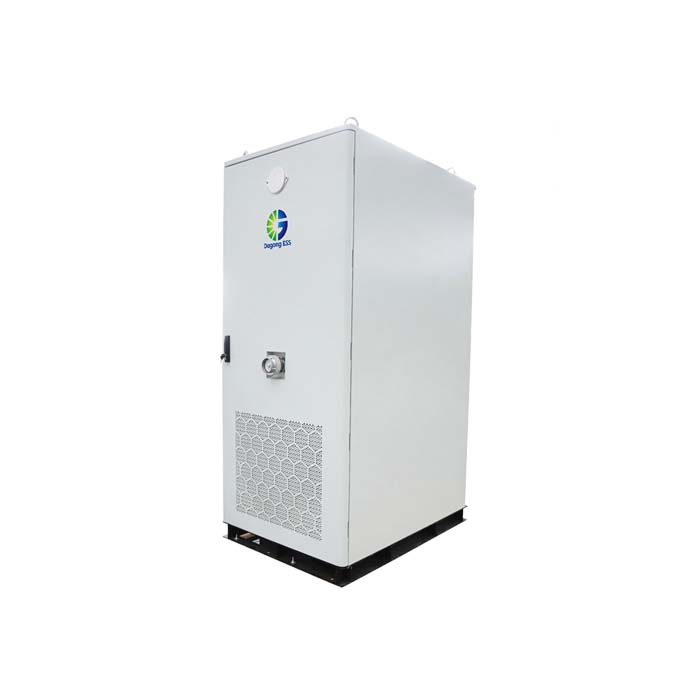
In contrast, AC-side containerized energy storage integrates batteries, PCS, transformers, and control systems inside the enclosure, providing direct AC output to the grid or facility loads. This architecture simplifies deployment and retrofitting, especially for sites with existing PV or wind infrastructure. By delivering plug-and-play AC power, these systems reduce engineering complexity and allow independent operation, black-start capability, and microgrid formation. While AC-coupled systems may incur slightly lower round-trip efficiency compared to high-voltage DC, they excel in operational flexibility, retrofit applications, and seamless integration with legacy electrical systems.
Technical Comparison: DC vs AC Architectures
The DC-side design shines in scenarios prioritizing efficiency, high power throughput, and large-scale utility integration. High-voltage DC operation reduces I²R losses, eliminates redundant conversion stages, and improves energy density, often 15–20% higher than comparable AC-side containers. Integrated thermal management, including liquid cooling, provides consistent temperature control within ±3°C, critical for long-life operation and high-cycle applications. DC-coupled systems are ideal for grid services such as frequency regulation, fast response load shifting, and smooth integration with large-scale PV and wind farms.
On the other hand, AC-side containers offer practical advantages for retrofit projects, commercial facilities, and applications requiring minimal on-site engineering. Integrated PCS and transformers enable direct AC connection, making them suitable for adding storage to existing solar arrays or wind installations without altering the DC infrastructure. AC-side systems are particularly effective in providing backup power, peak shaving, demand charge management, and microgrid support in commercial, industrial, and remote areas. Operational simplicity, single-supplier responsibility, and built-in safety interlocks enhance deployment speed and reduce coordination challenges between vendors.
Application Scenarios: Choosing the Right Architecture
Selecting between DC-side and AC-side container energy storage depends largely on site conditions and project goals. For utility-scale renewable projects with high power requirements and frequent cycling, such as solar farms ranging from 10MWh to hundreds of MWh, DC-coupled systems maximize efficiency and minimize losses. Large-scale wind integration also benefits from DC-side architecture, smoothing power output and supporting grid stability.
For commercial and industrial facilities, retrofits, or projects where existing PV or wind infrastructure is already in place, AC-coupled containers offer unmatched flexibility. They simplify grid interconnection, allow independent operation during outages, and support black-start or microgrid applications. In regions with unreliable grid connections or off-grid facilities, AC-side systems provide dependable backup power and can be scaled modularly to meet evolving energy demand.
Hybrid projects increasingly combine DC- and AC-side advantages: DC-coupled containers feed high-efficiency storage for bulk energy shifting and grid services, while AC-coupled units handle localized backup, demand response, and operational flexibility. This approach allows project developers to tailor performance, efficiency, and cost according to specific operational priorities.
Economic Considerations and System Lifecycle
Cost comparisons between DC- and AC-side systems depend on battery chemistry, cooling method, system capacity, and project complexity. DC-side containers, with their high-voltage DC bus and modular configuration, typically require higher initial integration and engineering but deliver superior long-term efficiency and lifecycle cost advantages, especially in high-cycle, utility-scale deployments. AC-side containers reduce upfront design complexity, enable rapid deployment, and minimize retrofitting costs, which can be critical for commercial or industrial applications with existing infrastructure.
Battery lifetime is similar across architectures when using LFP technology, with Dagong ESS systems achieving 6000–8000 cycles at 80% depth-of-discharge and 15–20 years of service life under optimal conditions. Thermal management, whether through air or liquid cooling, is crucial in extending battery and PCS lifespan. AC-side PCS components generally have a 10–15 year service life, with proper maintenance ensuring alignment with the battery system.
Making the Right Choice
In essence, DC-side container energy storage is optimal for high-efficiency, high-capacity, grid-scale applications that demand frequent cycling and maximum energy utilization. AC-side container energy storage excels in retrofit projects, commercial and industrial facilities, and scenarios prioritizing installation flexibility, operational independence, and simplified integration. Understanding the technical distinctions and aligning them with project objectives ensures optimal performance, cost efficiency, and long-term reliability.
Leading manufacturers, including Dagong ESS, provide both DC- and AC-side containerized solutions, offering modular designs from compact commercial units to multi-megawatt utility-scale systems. Their products demonstrate how modern energy storage can be tailored to diverse applications while maintaining high efficiency, safety, and lifecycle performance.
If you are interested in containerized energy storage products, please contact Dagong ESS, Email: sales@dagongess.com.